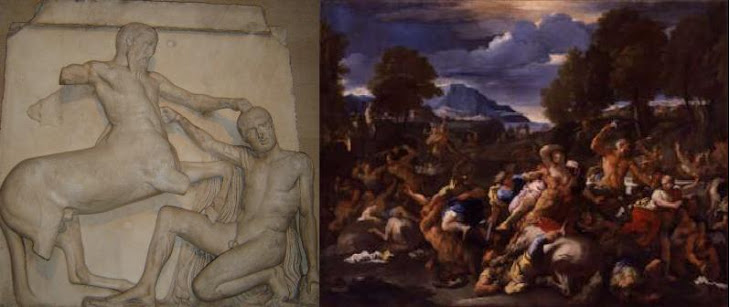
The Centaurian Gate of Knowledge!

(picture: Centaurs & Lapiths - courtesy of British National Museum [Parthenon gallery], London UK)

...a single authoritative source for Science, Economics, Technology and the New Age...

Origin of inspiration: Οι Κένταυροι - The Centaurs

Origin of force: Πήλιο, το Βουνό των Κενταύρων - Pelion, Mountain of The Centaurs


Centaurian search engine...

Saturday, 15 May 2010

Επιχειρηματικό περιβάλλον και Στρατηγική των επιχειρήσεων...η επανάληψη μήτηρ μαθήσεως!


Για έναν οργανισμό (ή εταιρεία), ο πρώτος, θεμελιώδης και καθοριστικός παράγοντας για την κερδοφορία της είναι, η ελκυστικότητα του κλάδου στον οποίο δραστηριοποιείται. Ο απώτερος σκοπός της ανταγωνιστικής στρατηγικής μιας εταιρείας είναι, να ανταποκριθεί στις ανάγκες της αγοράς και να τροποιήσει τους κανόνες του παιχνιδιου προς όφελος της (Porter, 1985).

Η ανάλυση του επιχειρηματικού περιβάλλοντος, όπου μια εταιρεία δραστηριοποιείται, προϋποθέτει ότι, η αγορά έχει προκαθοριστεί και η εταιρεία έχει σαφή παρουσία σε αυτήν.

Η αναγνώριση της αγοράς που επιλέγεται για ανάλυση, αποτελεί ένα από τα πιο σημαντικά προαπαιτούμενα για τον καθορισμό και της τελικής στρατηγικής. Για παράδειγμα, δικαιολογείται η παρουσία μιας εταιρείας με ένα μόνο προϊόν σε ένα τμήμα της αγοράς, να αποτελεί και την βάση διαμόρφωσης της συνολικής στρατηγικής της; Μήπως είναι απαραίτητη η συνολική εκτίμηση των δυνατοτήτων των προϊόντων, των δυνάμενων αγορών που θα μπορούσαν να εξυπηρετηθούν (πραγματοποιηθούν πωλήσεις), και μιας τελικής εκτίμησης και πρόβλεψης της κερδοφορίας και δυνατοτήτων για την αγορά που επιλέγεται κάθε φορά; (Grant, 1997).


Αναλύοντας το επιχειρηματικό περιβάλλον, είναι δυνατόν να εκτιμηθεί η κερδοφορία, μακροπρόθεσμα (εάν υπάρχει ή δεν υπάρχει), αλλά ίσως πιο σημαντικό από όλα, η θέση της εταιρείας στην εν λόγω αγορά. Η ανάλυση, επιτρέπει επιπρόσθετα και την ανάδειξη της στρατηγικής εκ των προτέρων, μια και διερευνώνται οι δυνατότητες και το μέλλον των προς διερεύνηση αγορών. Σχετικά με το ανταγωνιστικό περιβάλλον, τα πιο σημαντικά ερωτήματα που πρέπει να απαντηθούν είναι (Higgins and Vincze, 1993):

  1. Ποιοί είναι οι ανταγωνιστές σήμερα και ποιοί θα είναι στο μέλλον;

  2. Ποιές οι στρατηγικές των κυριοτέρων ανταγωνιστών και οι αντικειμενικοί στόχοι;

  3. Πόσο σημαντική είναι η συγκεκριμένη αγορά για εκείνους;

  4. Ποιά τα πιο σημαντικά πλεονεκτήματα των ανταγωνιστών;

  5. Ποιές οι αδυναμίες τους, που τους καθιστούν "ευάλωτους παίκτες";

  6. Ποιές οι πιθανές αλλαγές στην τακτική τους στο μέλλον;

  7. Ποιά η επίδραση των παραπάνω, συνολικά στην αγορά και σε κάθε έναν ανταγωνιστή ξεχωριστα;

 
Στο επίπεδο των οικονομικών χαρακτηριστικών της αγοράς, υπάρχουν ερωτήματα που θα μας απασχολήσουν, τόσο στο παρόν επίπεδο της ανάλυσης, όσο και στην συνέχεια, σε εταιρικό επίπεδο. Ενδεικτικά ερωτήματα αποτελούν τα κάτωθι (Thompson and Strickland, 1999):

  1. Μέγεθος της αγοράς.

  2. Ρυθμός ανάπτυξης της αγοράς.

  3. Ο αριθμός ανταγωνιστών και η "κυκλικότητα" της αγοράς.

  4. Ο αριθμός των πελατών και το σχετικό τους μέγεθος.

  5. Τα κανάλια διανομής και η πρόσβαση των πελατών σε αυτά.

  6. Η διαφοροποίηση των προϊόντων του ανταγωνισμού.

  7. Δυνατότητα εισόδου (χαμηλά ή υψηλά εμπόδια) στην αγορά.
Η "κυκλικότητα" της αγοράς, τεκμαίρεται από την παρουσία προϊόντων που βρίσκονται σε μια πορεία συγκομιδής κερδών (harvesting period) και αντικατάστασης τους.
Ενδέχεται, να παρουσιαστεί το λεγόμενο "ανταγωνιστικό τράνταγμα" στην αγορά, όπου οι μικρότερες εταιρείες θα αναγκαστούν, με συμπιεσμένες τις κερδοφορίες τους και καθιστώντας μη ελκυστική την επένδυση στους μετόχους, να αποσυρθούν από αυτή, με αποτέλεσμα να υπάρχει μεγαλύτερη ακόμη συγκέντρωση (consolidation) των διατιθέμενων προϊόντων, από λιγότερες επιχειρήσεις (Harrison and John, 1998).

Η τεχνολογική υπεροχή των μεγάλων εταιρείων, τους επιτρέπει να δημιουργούν ανταγωνιστικό πλεονέκτημα, με την εισαγωγή καινοτόμων και εξαιρετικά εξειδικευμένων σκευασμάτων. Αποτέλεσμα των παραπάνω είναι, τα προϊόντα τους να αντικαθιστούν προϊόντα ανταγωνιστών, ενώ αν συνδυάζουν και σχετικά ανταγωνιστική τιμή, τότε το φαινόμενο επιταχύνεται. Το γεγονός αυτό από μόνο του, δεν προϋποθέτει ότι, η καινοτομία είναι και το μοναδικό ανταγωνιστικό πλεονέκτημα που αυτές οι εταιρείες έχουν. Σε συνδυασμό με την ισχυρή γραμμή προϊόντων (products' pipeline) και την επίτευξη διαρκούς τροφοδότησης της αγοράς με καινοτομική δραστηριότητα (innovative activity), τους επιτρέπει να αντιλαμβάνονται τα μυνήματα πρώτοι από τον ανταγωνισμό και να προλαβαίνουν τις εξελίξεις (Kay, 1993). Η προηγούμενη πρόταση, με λίγα λόγια, είναι η επίτευξη του ανταγωνιστικού πλεονεκτήματος στην αγορά των αγροχημικών, με αρωγό τις τεράστιες δαπάνες σε έρευνα και ανάπτυξη που διατίθενται.

Είναι πασιφανές ότι, η στρατηγική ανάλυση μπορεί να περιέχει τόσες μεταβλητές όσα και τα διαθέσιμα στοιχεία προς ανάλυση. Από εκεί και πέρα, η εύρεση της θέσης μιας εταιρείας συνολικά στην αγορά, δεν αποτελεί και ιδιαίτερα δύσκολη υπόθεση, μια και όπως διαπιστώνεται στην συνέχεια, η εταιρεία έχει επιλέξει να είναι σε αγορές που τα περιθώρια κέρδους της είναι διψήφια και η ίδια συγκαταλλέγεται ανάμεσα στις τρεις ή τέσσερεις πρώτες εταιρείες.

Παρ' όλα αυτά, ο προηγούμενος ισχυρισμός υπόκειται σε θεωρητικό σφάλμα. Για παράδειγμα, αν κανείς επιχειρήσει να πραγματοποιήσει την στρατηγική ανάλυση του εξωτερικού περιβάλλοντος της εταιρείας, τότε θα ήταν δυνατή η εύρεση της θέσης της εταιρείας, βάσει ανάλυσης στρατηγικών ομάδων (strategic groups analysis: SGA), όπως προτείνεται από τους Παπαδάκη (1999: σελ. 83-7) και, Flavian και Polo (1999).

Οι αντικειμενικοί στόχοι της παραπάνω ανάλυσης συνοψίζονται στην εκτίμηση του ανταγωνισμού μεταξύ των εταιρειών, την ανάλυση SWOT, την αξιολόγηση των εκάστοτε επιλεγόμενων στρατηγικών στο χρόνο, την ελκυστικότητα της κάθε στρατηγικής αλλά και την σύνδεση τους με την εταιρική απόδοση, κάθε μιας εταιρείας της αγοράς ξεχωριστά.

Κλείνοντας την παρούσα σύντομη αναδρομή, στις αρχές της επιχειρησιακής στρατηγικής και διοίκησης, όπως αυτές διδάσκονται σε όλα τα κλασσικά προγράμματα ΜΒΑ, μπορώ να πω με σιγουριά ότι μετά από 7 χρόνια γραφής του παραπάνω κειμένου, στα πλαίσια της μεταπτυχιακής μου διατριβής, οι βασικοί άξονες και παράγοντες που παίζουν ρόλο στην πρακτική των επιχειρήσεων, παραμένουν οι ίδιοι.

Τελικά, μετά από όλα αυτά, αναρωτιέμαι μερικές φορές: «Μήπως δεν έχουμε ιδέα περί τίνος πρόκειται όταν μιλάμε για business και ακολουθούμε τον κανόνα κάνε το όπως και ο προηγούμενος(!);»

Η Ελλάς, το Δ.Ν.Τ. και η χρεωκοπία...εν έτει 2010!


Ιδού τα στοιχεία
για την Ελληνική οικονομία, με βάσει τις σημερινές παραδοχές και υποθέσεις των εμπειρογνωμόνων του ΔΝΤ (επισυνάπτεται η σχετική ανακοίνωση της 9/5/2010):


  1. Η Ελλάς λαμβάνει δάνεια 30 δις € (περίπου 38 δις $), κατ' εξαίρεση από το ΔΝΤ, ίσα με 3.200 φορές τη συμμετοχή της
    (ή αλλιώς ποσόστοση της ως μέλος του ΔΝΤ) σε αυτό
    (το αναλογούν ποσό είναι 935 εκ. €)
    για τα επόμενα 3 χρόνια.
    Οι δανειστές μας είναι δύο: η ΕΚΤ (Ευρωπαϊκή Κεντρική Τράπεζα) και το ΔΝΤ. Ο συνολικός δανεισμός ανέρχεται στα 110 δις € (περίπου 145 δις $)

  2. Η Ελλάς έχει να αντιμετωπίσει 3 κύρια προβλήματα:
    1. Αποκατάσταση της εμπιστοσύνης και της δημοσιονικής
      σταθερότητας (διατήρηση του κράτους)
    2. Αποκατάσταση της ανταγωνιστικότητας (περικοπές μισθών, διαφάνεια, ανάπτυξη (εξαγωγών κλπ), ανταγωνιστικές τιμές)
    3. Διασφάλιση της σταθερότητας
      του
      χρηματοπιστωτικού
      τομέα (τράπεζες, χρηματοπιστωτικά ιδρύματα)
  3. Η Ελλάς αναμένει (επίσημη) ανεργία κοντά στο 15% (το μέγιστο) για τα επόμενα 5 χρόνια (ίσως και περισσότερο)
  4. Η Ελλάς αναμένει το συνολικό της χρέος (δημοσιονομικό = ομόλογα) να ανέρθει στο 149% του ΑΕΠ για τα επόμενα 5 χρόνια
  5. Η Ελλάς αναμένει ανάπτυξη του (ονομαστικού) ΑΕΠ από το 2012 και έπειτα (+2.1%) και σταθερά ανοδικό τα επόμενα έτη.
  6. Η Ελλάς αναμένει μηδενικό (κοντά στο 1%) σχεδόν επίτοκιο δανεισμού, για τις ανάγκες της, λόγω παρέμβασης του ΔΝΤ + ΕΕ.


Με βάσει τις παραπάνω εκτιμήσεις, από το επίσημο ανακοινωθέν του ΔΝΤ, για πρώτη φορά και με εξαίρεση τις εκθέσεις της ΤτΕ (Τράπεζα της Ελλάδος) που κατά καιρούς βλέπουν το φως της δημοσιότητας, είναι η πρώτη φορά που δημοσιεύεται έγκυρη μελέτη (σε χρόνο ρεκόρ) για την οικονομική κατάσταση της χώρας.


Η σημαντικότερη, όλων, έκθεση του Διοικητή της ΤτΕ που συνοψίζει όλα τα γεγονότα σχετικά με την Ελληνική οικονομία και το κράτος (παρατήρηση: αποτελεί έγγραφο κοινοποιημένο πάντα στον Πρόεδρο της Δημοκρατίας (δια χειρός Διοικητή της ΤτΕ) Πρωθυπουργό, Υπουργό Οικονομίας & Οικονομικών κλπ), έως και σήμερα αποτελουσε «έγγραφο για τα σκουπίδια», από τους Έλληνες τεχνοκράτες των σχετικών Υπουργείων (link της έκθεσης:
http://www.bankofgreece.gr/BogEkdoseis/ekthdkth2009.pdf).


Η Ελληνική οικονομία (και η κυβέρνηση κατ' επέκταση) αναγκάζεται να ακολουθήσει πιστά, τη σχετική συμφωνία του ΔΝΤ που χαρακτηρίζεται από τις υγιείς δυνάμεις της ευρύτερης Ελληνικής οικονομίας, ως ένα σχέδιο προϋπολογισμού (yearly budget plan) όπου κάθε σοβαρή επιχείρηση έχει και εκτελεί πιστά (ευαγγέλιο) εάν σέβεται τον εαυτό της και θέλει να βρίσκεται στην «αγορά» και τα επόμενα χρόνια (στο μέλλον)!


Οι τεχνοκράτες του ΔΝΤ, που βρίσκονται στο στόχαστρο επιλεγμένων άσχετων δημοσιογράφων + πολιτικών, έχουν πρσφέρει στην Ελληνική οικονομία (κράτος) μια περίοδο χάριτος για να αποφευχθεί η «χρεωκοπία» του. Το αν θα χρεωκοπήσει ή όχι το Ελληνικό κράτος (σημείωση: υπάρχει ο σχετικός κίνδυνος σε πολύ μεγάλο βαθμό) δεν εξαρτάται πλέον από το ΔΝΤ + ΕΕ αλλά από την ίδια την οικονομική (αναπτυξιακή) πολιτική που θα ακολουθήσει η Κυβέρνηση άμεσα (όπως λέγεται και στις πωλήσεις: «εχθές»!)


Για να είμαι πιο ακριβής και πρακτικός (και όχι θεωρητικός όπως έχει σχολιάσει ανώτατο στέλεχος των επιχείρησεων, που σέβομαι και ακούω προσεκτικά τις παρατηρήσεις του), θα παραθέσω σύντομα τις συνέπειες μιας λεγόμενης χρεωκοπίας (ή αλλων σκέψεων όπως: βγαίνουμε από το Ευρώ και την Ε.Ε. και λοιπές ασυναρτησίες!).


Για να είμαι ακόμη πιο ξεκάθαρος, θεωρώ ότι η συζήτηση περί χρεωκοπίας (βγαίνουμε από το Ευρώ, Ε.Ε. κλπ), αποτελεί ανεδαφική προσέγγιση, επικίνδυνη πρακτική αλλά και καταστροφική για την Ελληνική οικονομία, κοινωνία για το καθόλα θεωρούμενο συντεταγμένο Ελληνικό κράτος, όπως το γνωρίζουμε μέχρι σήμερα. Κοινώς η συζήτηση αυτή είναι «βλακωδέστατη» και επικαλούμενος την ρήση του Διοικητή της ΤτΕ, κ.κ. Προβόπουλου στην εκπομπή «Οι Νέοι Φάκελοι» (Α.Παπαχελάς, ΣΚΑΙ), όσοι κάνουν τέτοιες σκέψεις είναι για το «φρενοκομείο»!!!


Πως χρεωκοπεί ένα κράτος (οδηγός για απλούς πολίτες);


  • την ημέρα καταβολής μισθών + συντάξεων (τυχαίου μήνα) δεν πιστώνονται οι τραπεζικοί λογαριασμοί των δικαιούχων (υπαλλήλων + μισθωτών [ιδιωτικού+δημόσιου τομέα])
  • την ημέρα λήξης των κρατικών ομολόγων (και πληρωμής των κατόχων τους) δεν πιστώνονται οι τραπεζικοί λογαριασμοί των δικαιούχων (ιδιώτες, τράπεζες κλπ)
  • την ημέρα που το Ελληνικό κράτος «βγαίνει» στην (παγκόσμια) αγορά να δανειστεί τα επιτόκια δανεισμού (spread) είναι πάνω (όπως και έγινε!) από 1.000 μονάδες (ή 10%) πάνω από το παρεμβατικό επιτόκιο της ΕΚΤ (Ευρωπαϊκή Κεντρική Τράπεζα) που είναι περίπου στο 1-3% αναλόγως την οικονομική κατάσταση.

  • την ημέρα δανεισμού/συναλλαγών των τραπεζών από την διατραπεζική αγορά (παγκόσμια) συμβαίνουν τα εξής:
    •  Τα επιτόκια δανεισμού είναι σε πολύ υψηλά επιπεδα (>5-8% ή 500-800 μονάδες βάσης αντίστοιχα) (επιπροσθέτως) σε σχέση με το επιτόκιο δανεισμού του ίδιου του κράτους (= spread). Με απλά Ελληνικά, γιατί να δανεισθούν οι τράπεζες με καλύτερους όρους από το κράτος; Όχι μόνο δεν θα συμβεί αυτό, αλλά οι αγορές θα βάλουν και «καπέλο» επάνω στο spread.
    • Οι Ελληνικοί κρατικοί τίτλοι (ομόλογα) που κατέχουν στα χέρια τους έχουν χαρακτηριστεί ως «σκουπίδια» (junk) από την διεθνή αγορά, που σημαίνει ότι ήδη έχει προεξοφληθεί η αποχή των αγοραστών από εκείνα (ή αντίστοιχα η μαζική πώληση τους = με συνέπεια να χάσουν την αξία τους για οποιδήποτε ενδιαφερόμενο αγοραστή/πωλητή).
  • την ίδια περίοδο «δυσκολίας» δανεισμού του κράτους/τραπεζών, οι καταθέτες αποσύρουν μαζικά (ή πάνω από το 40-50% των συνολικών διαθέσιμων καταθέσεων) τις καταθέσεις τους από τις Ελληνικές τράπεζες με αποτέλεσμα να υπάρχει «αντικειμενική» δυσκολία χορηγήσεων (δάνεια) από τις ίδιες τις τράπεζες προς την ευρύτερη οικονομία. Για αυτό το λόγο ό Υπουργός Οικονομίας εγγυήθηκε τις καταθέσεις έως 100.000 € (και μόνο!) και όχι το σύνολο των καταθέσεων.
  • την ημέρα που το Ελληνικό κράτος θα ζητήσει την «επαναδιαπραγμάτευση του γενικού χρέους». Πρακτικά αυτό σημαίνει ότι π.χ. αν χρωστάει 1 € θα πληρώσει τμήμα του και όχι ακέραιο το 1 € ή διαφορετικά θα πληρώσει ακέραιο το 1 € αλλά σε μεγαλύτερο χρόνο από αυτό που είχε συμφωνηθεί με τους πιστωτές της (ημερομηνία λήξεως/πληρωμής των κρατικών ομολόγων) Την τελευταία φορά  που έγινε αυτό στην παγκόσμια οικονομία, ήταν από την Αργεντινή που το 2001 προχώρησε σε στάση πληρωμών [ταυτόχρονη είσοδο του ΔΝΤ] λόγω εξωτερικού χρέους περίπου 40 δις $ (το Ελληνικό ονομαστικό χρέος είναι περίπου 307 δις € ή περίπου 10 φορές μεγαλύτερο
    [σε δολλάρια] από
    αυτό που είχε η Αργεντινή το 2001) και με επαναδιαπραγμάτευση του με όρους 0.40 cents ανά δολάριο. Πρακτικά σημαίνε ότι η Αργεντινή ήρθε σε συμφωνία με τους πιστωτές της για πληρωμή 0.40 cents ανά 1 δολάριο που τους χρωστούσε (με ταυτόχρονη συμφωνία πληρωμής στο ακέραιο των συνολικών της οφειλών αλλά σε μεγαλύτερο βάθος χρόνου). Όπως λέμε και στην αγορά, αφού μας «έριξαν κανόνι» τουλάχιστον να τα παίρνουμε λίγα λίγα και να μην χάσουμε τα λεφτά μας αν δεν τα χάσουμε τελείως! Δεν υπάρχει όμως (σόφρων) πωλητής που να κάνει business ξανά με αυτόν τον πελάτη! Ο νοών νοείτο!


Οι συνέπειες χρεωκοπίας ενός κράτους, όπως καταλαβαίνει ο καθένας από εμάς που δουλεύει στην ελεύθερη αγορά, είναι οδυνηρές για τους πολίτες του αλλά και την γενικότερη πορεία του έθνους.
Η αποφυγή χρεωκοπίας του Έθνους είναι μονόδρομος και ο καθένας από εμάς, από το πόστο του, πρέπει να κάνει τα αδύνατα δυνατά για να μην φτάσουμε έως εκεί.


Ο δρόμος είναι ανηφορικός αλλά όχι ατέλειωτος. Δεν υπάρχουν περιθώρια για ευχολόγια, παραινέσεις, συμβουλές και διάφορα ευφυολογήματα.


Η σημερινή κατάσταση του Ελληνικού κράτους απαιτεί δραστικές παρεμβάσεις σε όλα τα επίπεδα της οικονομίας, κοινωνίας αλλά και συμπεριφοράς όλων μας. Είμαι πεπεισμένος ότι την λύση θα την δώσουν οι υγιείς δυνάμεις και πάλι. Οι προϋποθέσεις τίθενται από εμάς αλλά και από την ευρύτερη παγκόσμια «κοινωνία» όπου γνωρίζει τι γίνεται σε κάθε γωνιά αυτού του κόσμου. Δεν έχουμε λόγο να πιστεύουμε ότι ό, τι γίνεται στην πατρίδα μας είναι κρυφό. Όπως έλεγαν και οι σοφοί Αρχαίοι Έλληνες «ουδέν κρυπτόν υπό τον Ήλιο».


Όπως και σε κάθε σύγχρονη επιχείρηση, έτσι και στο κράτος, η κεφαλή είναι εκείνη που πρέπει να δώσει το καλό παράδειγμα και να εμπνεύσει τον άνθρωπο ώστε εκείνος να αισθανθεί «μέτοχος» στην προσπάθεια για
ανάπτυξη, ανάκαμψη, επιβίωση και πρόοδο.


Ο χρόνος είναι χρήμα. Το τρίπτυχο της επιτυχίας είναι ένα και μόνο: ΑΝΑΠΤΥΞΗ – ΑΝΑΠΤΥΞΗ – ΑΝΑΠΤΥΞΗ.


Λέμε στις πωλήσεις, όταν οι business πάνε καλά, τότε δεν πειράζει αν δεν προλάβαμε να κάνουμε όλα τα πράγματα σωστά. Αλλά για να πηγαίνουν οι business καλά πρέπει να υπηρετούμε το κράτος (ή την επιχείρηση μας) σαν να είναι το σπίτι μας, σαν να είναι η οικογένειά μας.

Wednesday, 3 February 2010

Greece’s possible defaulting process is making some EU officials losing their sleep.


Greece's possible defaulting process is making some European officials losing their sleep. Someone would ask the real reason behind this. Is EU so sensitive on Greece's public economics? Could it be that the real reasons are deeper than a random accumulation of economic facts leading to international speculation on a nation's ability to finance the economy?
Let me be a little more specific and present you some facts, easy, plain and simple. Greece as one of the historic members of EU entered the EU (old EEC) in 1981 under the presidency of Mr. K. Karamanlis (the greatest politician of modern Greece after the unprecedented E. Venizelos of the late 18th century). Greece has been a close observer of the developments of the oldest version of EU, the European Community of Steel & Coal and due to Greece's political unstable environment in the 60's and 70's. Although great bonds existed between President Karamanlis and Charles De Gaulle at that time Greece was ruled by a regime of military officers known as "Hounta" (from late 1966 to 1974).
Since that time, Greece has been given generously a huge amount of money to have its economy lifted, assist farmers, built roads and other public stimulus measures in order to bring order to its domestic problems and open issues. Greek politicians of the late 30 years failed to properly utilise EU money for the long term benefit of the Greek economy, state and as a result its citizens.
Greek state has become a dinosaur. Bureaucracy, corruption and complex legislation did not let entrepreneurs to unleash their creativity and vision. As the one of the most historic nations in the world, Greeks tended to believe that they did not have to do anything more than its ancient predecessors rather than sit and "milk" fat EU funds. Believe me when I say that Greeks are not lazy, far from it. Greek people work more than any other European nation but do not rip the fruits of their effort due to a rotten political system.
As a result, wealth produced was gathered in the hands of the few. Young people were raised with a vision: "to become public servants" to be able to secure their monthly wages and live happily ever after. Gross Domestic Product (GDP) has risen to almost 285 Bln € and Public debt to more than 300 Bln €.
Is it too much? Well…………………….

  1. for a country that does not have serious heavy industry (we do not produce cars, guns, computers, telephones, mobiles, chemicals, drugs, steel or exploit oil and/or natural gas),

  2. for a country that does not offer incentives to potential domestic and international investors to invest heavily,

  3. for a country that cost of life, reaches and/or exceeds other developed European countries' cost and in some cases the excess is over 20-30%, while at the same time wages are 50% less that average European wages. For example the basic wage is 500-600€ (1.200 € at EU level). Corporate executives are mocked by public state employees for their wages!

  4. for a country that its government's budget relies into an average of 600-900 Mio € of taxes coming from smoking and cigarettes 'consumption,

  5. for a country that its government's budget relies into more than 1 Bln € of taxes from imports of cars and their relevant taxation (customs, special tax on petrol/gas consumption).

  6. for a country that once used to be the leader (worldwide/European) in specific crops (cotton, grains) and self-sufficient in the majority of the remaining crop (fruits, vegetables, corn etc.) and livestock (cattle, dairy, sheep, swine, poultry) production, having >25% of its active working force in the wider Agricultural Economy (now shrinking to 10% and going down!)

  7. for a country that was #1 in the world in the shipping industry, now being in a continuous bleeding situation (more and more Greek ship flags are brought down and move to other countries).

  8. for a country that young couples are getting married over the age of 30 years old, thus adding to the "aging" factor of the Greek nation.

  9. for a country that treats international immigrants (legal or not) like they are inferior citizens. Remember during the past 15.000 years of Greek history, Greeks are renowned for their international spirit and migration into foreign and unknown territories.

  10. for a country that pays pensions and state's employees (among other things) with continuous lending from international markets (only for 2010 it is estimated that the Greek government will borrow somewhere between 50-60 Bln €.

  11. for a country that "produces" young scientists with no future in the job market. Greece still remains UK's "best" supplier in young students who wish to pursue a better future. And one might add why not? It's fine with me!

    ..................., yes it is too much! It is outrageous!

    Do you see where I am getting at?

    If I were an EU official, of course I would be very anxious.

    Why?

    Would you have lent such a problematic "customer"? I do not think so! Well on the other hand, do you think that you would lose you money? The answer is clear: NO! There is no way, that you could lose your money. If anything, Greeks (and Nations) always pay their debts. But would you have lent this money, if you knew that in order to collect your reward (capital+ interest) you would have made a whole nation, suffer even more?

    With some quick calculations, only for 2010, planned lending from the Greek government at the amount of 50 Bln €, would generate a yearly amount, at the current rate (if not worsened) of lending: +7%, of >350 Mio €. In a period of 10 years, that is close to 4 Bln €. So Imagine, in ten years time, other things equal, the Greek government (keeping yearly lending at the same amount of 50 Bln €) would have to issue new lending for the same amount and find additional money to repay interests of prior 10 years loans (those money close to 4 Bln €!).

    Imagine also that Greek economy is experiencing severe contraction, an issue that no one talks about it, of close to 5% currently and this situation will not considerably improve the next couple of years. This means that GDP is decreasing. Purchasing power is diminishing, consumption is weakening, business activity is deteriorating.

    In plain words: Greek state takes new loans to repay older loans.

    To take it a step further, currently around 20% of GPD goes to "payments" of older lending. So imagine adding more lent money to an already suffocating public budget. You do the math….

    Now that you get a glimpse of Greek economic situation, one might wonder is there any light at the end of this dark tunnel?

    Yes there is. The future is bright for the Greek economy as long as we start acting now in a very specific manner. Who should act to reverse this bad situation? Of course the Greek state must act and do it now, without taking into account the political cost and measures that will smoothen public feeling.

    Unless specific measures are taken, Greek people will suffer and struggle for survival, in order for the Greek state to find the money and pay its loans (among other things)!


    1. When we plan to lend money, we do not go into the international markets and say, for example, "we want to borrow between 3-5 Bln €" rather be very specific like "we will borrow 3,653 Bln €!" Lenders must know that they are dealing with a serious counterpart here.

    2. When we say that we budget for next year's public revenues, we don't say we will collect somewhere between 500-1000 Bln € from "x" tax. It's a big deviation, don't you think? We need to know exactly, from where, whom and by what means are we planning to do so!

    3. When we say that we have an excess of 60%, arithmetically speaking, than the actual public work force necessary for the state to operate, we do not keep them in place. We let them go. How do we plan to keep this "multinational" workforce get paid, when we do that with systematic lending?

    4. When we say that we have 17% of unemployment rate, we do not go around asking for money for the unemployment stipend (which is 454 € / month, less than 40% of EU average). We create jobs!

    5. When we say that we cannot pay pensions, we first (as government) pay our 5 Bln € debt to the national social agencies. We then sit down and adjust our system for sustainability and justice for all working force.

    6. When we say that we want to become a competitive economy we don't

      1. leave farmers on their own, without guidance, support and on-site help,

      2. hinder investments due to a bureaucratic, heavily corrupted and complex framework,

      3. increase taxes for multinational/international corporations and prevent them from investing in a more competitive Greek economic environment,

      4. we (as government) pay our debts to the business community and be their preferred customer,

      5. let the brightest of our minds leave the country and never come back,

      6. let the country without major infrastructure projects (harbours, railway, motorways, electric power plants, modern airports).

    7. When we say that we are a nation of social responsibility we don't

      1. create "monster cities" where no one wants to live, like the majority of Greek cities,

      2. let older people die in their apartments, lonely and without the proper hospitality

      3. treat immigrants like "slaves",

      4. leave young people with uncertainty about their future and their right to work, create a family and get social recognition,

      5. Say to people, you have to work until you are 70 years old in order to get your rightful pension.

    8. When we say that we are moving towards a "green economy" we don't

      1. let our forests to be destroyed because of private economic interests,

      2. let renewable energy investments "freeze" because we are incapable of setting a flexible and easy set-up system,

      3. let ourselves continue not to have established recycling technology for cities, private homes, businesses and waste management policy,

      4. Stimulate the use of cars, because we also get more taxes from this policy!
    It is time, to act. Enough is enough.
    I reached the age of 32, continuously being under a strict economic environment. I was always being uncertain about tomorrow. The Greek state has done nothing more, than to hurt me and my beloved ones. I am not willing to spare another minute of my life paying others' "incompetency" and "parasitic" behaviour.

Friday, 8 January 2010

ΔΙΑΧΕΙΡΙΣΤΙΚΗ ΣΥΝΕΙΔΗΣΗ (κόντρα στην ΦΟΡΟΛΟΓΙΚΗ ΣΥΝΕΙΔΗΣΗ)

Δημοσιεύεται στο http://centaurus77.blogspot.com 8.1.2010


Κύριοι του Ελληνικού Κράτους


ΑΠΟΚΤΗΣΤΕ ΔΙΑΧΕΙΡΙΣΤΙΚΗ ΣΥΝΕΙΔΗΣΗ


και μετά απαιτείστε


ΦΟΡΟΛΟΓΙΚΗ ΣΥΝΕΙΔΗΣΗ
από τους πολίτες


Αξιότιμοι κύριοι/κυρίες,


Η περίπτωση της ΕΡΤ, και των αμοιβών των κύριων στελεχών της καθώς και το σύνολο των εργαζομένων που απασχολεί (>άνω των 2.500 χιλ) αποτελεί κακή εφαρμογή πολιτικής.


Τον τελευταίο καιρό, επικρατεί έντονος κοινωνικός αναβρασμός και μεγάλος θυμός μεταξύ των μεσαίων στρωμάτων (νέων κυρίως ανθρώπών), όπου θεωρώ και ότι ανήκω, σχετικά με παρόμοιες περιπτώσεις αμοιβών στον δημόσιο τομέα. Για του λόγου το αληθές, παραθέτω παρακάτω και τους σχετικούς διαδικτυακούς κόμβους όπου έχουν δημοσιευθεί σχετικές πληροφορίες (αναλυτικά με στοιχεία αμοιβών/πρόσωπα/οργανισμούς κλπ) καθώς και σχόλια επωνύμων και μη αλλά και μεγάλα δημοσιεύματα εφημερίδων ή άλλων μέσων μαζικής ενημέρωσης, όπως κάτωθι:


http://forum.christian-orthodox.gr/viewtopic.php?f=2&p=53868
http://www.stifora.gr/article.php?id=16871\
http://troktiko.blogspot.com/2009/12/blog-post_1624.html
http://www.enet.gr/?i=news.el.article&id=94066
http://www.inews.gr/89/oloi-oi-proklitikoi-misthoi-ton-dimosiografon-tis-ert.htm
http://www.techteam.gr/links/stories/604/__________.html
http://fimotro.blogspot.com/2009/12/blog-post_2086.html
http://www.thegreekz.com/forum/showthread.php?t=502286
http://www.mykosmos.gr/loc_mk/newsfeed_content.asp?ID=11028
http://www.inout.gr/showthread.php?t=52899
http://www.capital.gr/news.asp?Details=551913
http://www.onlinepress.gr/?p=39080
http://www.greekmoney.gr/index.php/permalink/25102.html
http://epikairotita24.blogspot.com/2009/12/blog-post_5404.html
http://www.elliniko-fenomeno.gr/?p=5117


Τα παραπάνω μέσα, αποτελούν μερικά εκ του συνόλου καθώς επίσης παρουσιάζουν τμήμα της συζήτησης που υπάρχει σχετικά με το θέμα. Εϊναι προφανές, ότι ένας λογικά σκεπτόμενος άνθρωπος δεν μπορεί να αποδεχθεί προτάσεις τύπου:


1) αύξηση φορολογικών βαρών στον απλό πολίτη
2) απόκτηση φορολογικής συνείδησης (συλλογή αποδείξεων κλπ)
3) αύξηση κινήτρων παραμονής στην εργασία
4) μείωση επιπέδου ζωής με άμεσα/έμμεσα μέτρα οικονομικής/κοινωνικής πολιτικής
5) αβεβαίοτητα στο εργασιακό και οικογενειακό περιβάλλον
6) τις χαμηλότερες αμοιβές ανά ειδικότητα (με βάση τα τυπικά/ουσιαστικά προσόντα) στην Ε.Ε. και την συνεχιζόμενη πίεση (πάγωμα μισθών) των εισοδημάτων.


Για να επιτευχθούν τα παραπάνω και να πειθαρχήσουν οι απλοί Έλληνες, ώστε να βγει η χώρα από το παρόν οικονομικό/κοινωνικό/πολιτισμικό "τέλμα" στο οποίο έχει περιέρθει, πρέπει να γίνει το εξής απλό:


Η ΚΥΒΕΡΝΗΣΗ ΝΑ ΑΠΟΚΤΗΣΕΙ ΔΙΑΧΕΙΡΙΣΤΙΚΗ ΣΥΝΕΙΔΗΣΗ


("να συμμαζέψει τα έξοδα της")


+
Η ΚΥΒΕΡΝΗΣΗ ΝΑ ΠΡΟΣΕΛΚΥΣΕΙ ΞΕΝΕΣ/ΕΓΧΩΡΙΕΣ ΕΠΕΝΔΥΣΕΙΣ ΜΕ ΣΤΟΧΟ ΤΗ ΔΗΜΙΟΥΡΓΙΑ ΝΕΩΝ ΘΕΣΕΩΝ ΕΡΓΑΣΙΑΣ
("κίνητρα για νέες επενδύσεις/δημιουργία νέων δουλειών")


με απτά / απλά / κατανοητά παραδείγματα προς τον Έλληνα πολίτη και όχι μέτρα μεσο-μακροπρόθεσμου χαρακτήρα.


Σε διαφορετική περίπτωση, αναμείνατε έντονες κοινωνικές αντιδράσεις καθώς και δραματική πτώση του επιπέδου διαβίωσης για την πλειοψηφία της Ελληνικής κοινωνίας, με όποιες συνέπειες για την συνοχή του κράτους και της διαφύλαξης του Δημοκρατικού πολιτεύματος.


Με εκτίμηση,
The Great Centaur Pileas


Δημοσιεύεται στο http://centaurus77.blogspot.com


8.1.2010

Mars, Alpha Centauri or a trip to your dream Earth place?

The ultimate truth (lie): "Man belongs to the universe"

"Will man ever be able to travel such long distances over space and master time?"

Answers have been given from one great man, Albert Einstein. His unsurpassed theories of relativity, although ahead of his time, can only be tested with the technological means of the future. Not a single current technology of man can really perform what A.Einstein has expressed in his famous words on"bending time".

The famous equation E=mc2 (square) has been the foundation of the light speed measurement (300,000 km/sec or to be more precise 299,792,458 meters/second) system (also called as the upper limit of speed measurement = nothing travels faster than light!) where modern astronomy, physics even science fiction (industry) is based on to make calculations, illustrations, hypotheses and eventually money. Light speed, in other words, is the "measure" or in Greek the "metron" (μέτρον) with which man comprehends, observes and test all assumptions made from modern science.

Just to make myself and others more familiar with the light year definition: A light year is used from scientists to measure, among other things, distance for very distant objects in space. One (1) light year, is the actual distance, one will cover, if he/she travells with the speed of light (299,792,458 meters/second) for 1 full Julian year.

Just to make some calculations:

1 Julian year = 365.25 days = 8,766 hours = 31,557,600 seconds
=> 31,557,600 sec x 299,792,458 m = 9,46073 *10x15 power m
or a little bit below 10 trillion km = 1 light year travelling

Though our current subject has to do with whether man can really fulfill it's destiny and travel far away into outer space. My dear reader, based on current technology rest assured that even for interstellar flights (travelling between different solar systems) this is impossible. Safe estimations put this feasible in maybe 1000 to 1500 years time, to be optimistic.

The reason behind why man cannot make either interstellar or intergalactic flights: scarcity of R E S O U R C E S + Τ Ι Μ Ε limitations. Let me explain myself:

1) there are not enough fuels, on this planet, for one to travel a mere light year, not to talk about several more to the nearest (4.2421 light years) star Alpha Centauri (and to a possibility of an earth-like life).
2) inter-galactic travelling is out of the questions mainly due to time problems. It takes too much time to travel, let's say for example from our "Milky Way" galaxy to the nearest "Andromeda" galaxy (named after the Greek princess Andromeda [Ανδρομέδα]) which is only 2,5 millions light years away! Not to talk about travelling somewhere else!
3) Faster Than Light (FTL) travelling is not excluded from the theory of general relativity. Of course here we have the basic hypothesis where there might be particles called "tachyons" from the Greek word "ταχύς" which means swift, that might travel in certain space areas undistorted from gravitational forces faster than light. Will man once master these particles, for own benefit?
4) Wormhole travelling, hm.... yes! of course I accept this physical phenomenon but it is slightly different from the fact that these phenomenas can serve man with his trips to the universe. Their main problem: very unstable (if not created at all!)

Last but not least: T I M E constraints on the traveller or "Einstein's Twin paradox". Imagine 2 twin brothers (Captain Ein and Officer Stein). Captain Ein is our space traveller and Officer Stein our Earth observer. Captain Ein is set to travel to Alpha Centauri, our nearest star (4,24 light years), his age at the start of the travel is 25 (the same with his brother Officer Stein!). Captain Ein takes off from Earth, hitting 99.99% the speed of light, headed to Alpha Centauri. He needs a little over 4 months, earth time, to reach Alpha Centauri and by the time he lands there he is 25 years + 4 months year old. Can you guess how old is his brother (Officer Stein)? ....guess harder....he is close to 49 years old.

If we were to travel to more distance stars, say to star Alnilam - 1,340 light years away from Earth - then Captain Ein would have needed a lifetime (he would be +70 years old when he would have landed there) and his brother would be history! (his Earth age would be 3,225 years old....).

Of course, the twin paradox is backed up with Doppler's time dilation theory (using advanced mathematics) which basically take Albert Einstein's General Theory of Relativity, one step futher and make it useful to understand things better. It's hard to think how time can affect man's biological clock! Isn'it?


Afterall, time is running differently depending on how fast you travel!


So, why better not book tickets for this place we talked about, with the exotic cocktails and this magnificent sunny beach? We better hurry, because I (we) don't have a lifetime to spend wondering!

A link to one of the best, self-explicable articles on "Twin Paradox": http://www.scientificamerican.com/article.cfm?id=how-does-relativity-theor&SID=mail&sc=emailfriend

Thursday, 7 January 2010

Are Greeks bad in economics or do we miss the picture?

"Economy": word originated from the greek "οικονομία", has two parts: eco (οίκος) = house + nomos (-νόμος) = law order. Its meaning basically is to keep "one's houses affairs in (law) order" as it is with economics!

In 2007, when everybody was talking about the growing global economy(+2-3% average) while at the same time fears over oil prices (remember: +140$ / barrel) and how this can significantly slow down global economy, a pertinuous questions swingled to everybody's mind "Are oil producers running things, afterall, or are we (governments/financial institutions/multinationals)?"


The answer to this question, is actually multi-fold. Imagine, for one moment, oil out of the global picture and then yourself in this new picture....Oh yes, I can understand your frustration!

I am not going to make a historic presentation of events (sociological, political, economical) over the last 3 (and many more) years, but the picture is very clear to my mind and it comprises of the following basic mega-trends:

Global economy is comprising of three (3) main categories:
1.1 Developed (G-8, Scandics, Australia)
1.2 Developing (most of Asia, Europe, S.America, central America, S.Africa)
1.3 Under-developed (Africa, parts of Europe, S.America, Asia)


Developed nations have reached a certain level, above of which any development is costly and requires the majority of natural resources to sustain. "Green technology/revolution" is far away from being the pillar to support "space revolution" where modern views of development adhere to. Other technological developments such as nuclear, fusion, hydrogen have better chance to help them take the step further.


Developing nations, and especially China and India, gradually demand their presence in the global podium of wellnes, development, life quality and all other areas of life where developed nations already have reached and maintain. To my mind, this demand is both right as well as a historic challenge to all mankind. I will also give you another simple justification, which I am sure all will agree with and is based on an exaggeration/adoptation of Paretto's rule: "Do you find it fair that 15% of global population consumes 85% of earth's natural resources?" If you agree, then I fear for our future as a generation!


Under-developed nations are in a very difficult situation, where every aspect of their life is deteriorating and options for progress, in to our modern society, are very scarce and sometimes impossible. Their progression, to my understanding, is based on the "goodwill" of the developed ones.


War "business" continues to be very profitable, for those involved, and it will grow in the near future since it has to deal with new "enemies" of the state: R E S O U R C E S managed by 3rd parties (not us!!!). Future warfare will not has to do with terrorism (as we know it) but with oil, food, water and land (learning from history).


Food supply needs, for the growing population (by 2020: +9 Billion) have to be met over a land which is under competition for a series of uses: domestic, energy, touristic, over-exploitation etc.


Just to summarise, a few of those that cross my mind.

Coming back to my country's recent economic affairs, I will be brief. Lately, too much fuss is happening about Greece's economy. Is Greece defaulting? How will Greece survive out of this economic crisis? Are other EU member states ready to help Greece?. All these questions, are based on news media posts (which I give you at the end of this post, for your information) and are the centre of discussions to Greek everyday life. I will summarise for you, my views on the matter:

1) Yes it is true that we spend more than we can afford

2) Yes it is true that we owe more than we can payout

3) Yes it is true that we have a big and disfunctional state

4) Yes it is true that there is corruption and beauracracy

5) Yes it is true that we cannot grow as much as the rest of the developing countries

6) Yes it is true that we have a high unemployment rate


....I can go on and on....


My next question is this: Can you name one country, out of the developing ones, that does not face these problems? What is the rest of the world doing for it's future?


Here is the list of important readings, over Greece's economic crisis:


BBC: http://news.bbc.co.uk/2/hi/8417270.stm

CNN: http://www.cnn.com/2009/BUSINESS/12/22/greece.credit.rating.economy/index.html

GUARDIAN: http://www.guardian.co.uk/business/2009/nov/30/greece-economy-budget-deficit-fears

BUSINESS WEEK: http://www.businessweek.com/ap/financialnews/D9CL0ML03

FINANCIAL TIMES: http://www.ft.com/cms/s/0/3f89645a-eee5-11de-92d8-00144feab49a.html

WASHINGTON TIMES: http://www.washingtontimes.com/news/2009/dec/17/s-and-p-downgrades-greece

WALL STREET JOURNAL: http://online.wsj.com/article/BT-CO-20091216-712130.html

DEUTSCHE WELLE: www.dw-world.de/dw/article/0,,4995478,00.html